
Altcoins: A Market with Very Mixed Trends
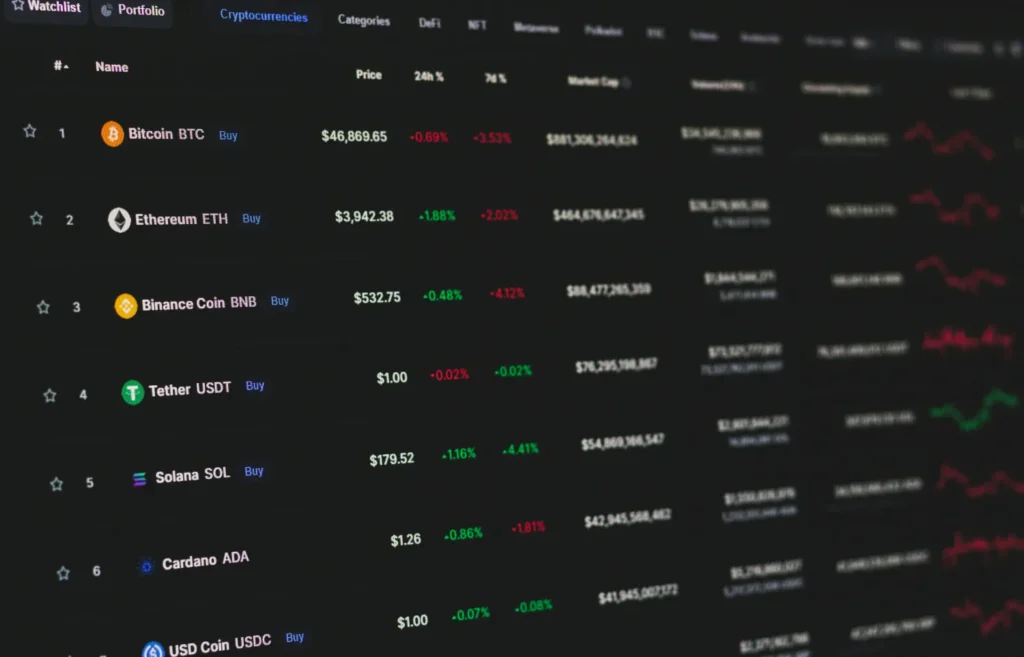
The cryptocurrency landscape is no longer limited to Bitcoin arbitrage alone. Today, the altcoin market is entering a phase of maturity where performance is no longer uniform but is dictated by the actual utility of the protocols.
On one hand, we’re seeing the resilience of ultra-fast, scalable ecosystems like Solana (SOL), driven by the boom in decentralized finance (DeFi), prediction markets, and the tokenization of real-world assets (RWAs). On the other hand, established giants like Ethereum (ETH) are facing temporary technical challenges as they await their next major upgrades, while many secondary tokens are under pressure from massive token unlocks.
In this two-speed market, diversification and fundamental analysis are more than ever the keys to success. But identifying the right project isn’t enough—you also need to know how to navigate the market safely.
01.
The Security Transition

Investing in the most promising altcoins is pointless if your assets or the platforms you use aren’t protected. In the decentralized world, online security is your only line of defense.
From phishing attempts to smart contract vulnerabilities and malware, threats are evolving just as quickly as technology itself. For investors and protocols alike, vigilance must be absolute. And among the most formidable cyberattacks facing the ecosystem, one stands out for its destructive potential: the DDoS attack.
02.
The Scourge of DDoS Attacks: When Overload Paralyzes the Blockchain
A DDoS (Distributed Denial of Service) attack is a malicious attempt to disrupt normal traffic to a targeted server, service, or network. To achieve this, cybercriminals do not attack from a single computer, but instead deploy an army of machines infected without their owners’ knowledge (computers, servers, connected devices), known as a botnet or “zombie network.”
Together, these thousands of coordinated machines simultaneously attack the same target, overwhelming it with an artificial deluge of requests and simultaneous connections.
The bank teller metaphor: Imagine a bank teller window designed to smoothly handle 50 customers per hour. If, suddenly, a crowd of 10,000 people rushes through the doors at the same time to ask bogus questions, the teller window is instantly paralyzed. Real customers, meanwhile, can no longer access it at all. This is exactly what happens during a denial-of-service attack.
03.
The Invisible Impact on Blockchain Infrastructure

While traditional DDoS attacks target the application layers of websites (such as an exchange’s homepage), they take on an entirely different dimension when they directly target nodes in a blockchain network (RPC).
In a decentralized ecosystem, nodes must validate transactions and communicate with one another in real time to maintain consensus. By flooding these nodes with “spam” transactions (often at very low cost), the attacker overwhelms the servers’ buffer (Mempool). As a result, bandwidth collapses, the network can no longer synchronize its blocks, and the entire blockchain may temporarily freeze, preventing anyone from transferring their altcoins.

Have a question? A project? Let's talk!
Whether you’re a curious investor, a cybersecurity enthusiast, or a Web3 project looking for a partnership, our team is here to help. Ask us your questions or share your suggestions—we’ll get back to you within 24 to 48 hours.